Family Histories

       Home       NEW Updates      About Us       Feedback      Historic Sites       Consultants          Contact Us       Terms/Conditions


MILL Ross

Compiled by Gordon Freegard based on research by Merilyn Stewart

Ross Mill and Frank Hawkes arrive in Gnowangerup
Ross and Frank were both draughtsmen by trade and had emigrated from England. They were both dissatisfied with their profession and felt the need for a change.
They intended to work for some time as dam sinking contractors then buy land. After travelling through several districts finding little work, they arrived in Gnowangerup.
They were desperate for work by then, and Ross can distinctly remember the first person he met in Gnowangerup – Judy Cockram. They had gone to ask if there was work, Judy directed them to Bill Cuneo.
It was perfect timing. Farmers had been relying on the Gnowangerup Shire to excavate their dams as individual farmers could not afford the expense of dam sinking equipment for a short-term project.
Initially the Shire did undertook dam sinking.
Donald Stewart recalled a dam on his property was one of the first excavated by the Shire bulldozer.
However, sinking dams for farmers proved too time consuming for Shire employees, so the Shire encouraged people to hire their equipment. This, too, was fraught with problems!

By the time Ross and Frank arrived in Gnowangerup, the Shire Clerk, Bill Cuneo, had resolved to seek out a private business to take on dam sinking contracts in the district.

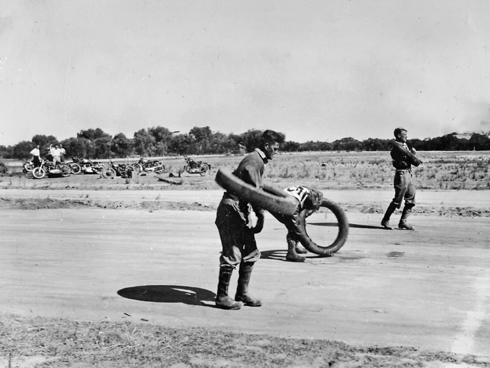
ROSS MILL              #1


Dam Sinking

Their first contract was with N.P. Davis, and work on his property alone kept them employed for almost all of the first 12 months. They earned about 100 pounds a week when ordinary wages for most occupations was 10 pounds.
They used the scoop and plough from the Gnowangerup Roads Board – they hired the scoop for 1 pound per week and the scoop for 10 shillings per week. Bill Cuneo made all the necessary arrangements. After 3-4 months they bought the ripper and after 3 to 4 months they had paid for the tractor.

The district was developing rapidly and Ross and Frank worked long hours. They would get started at around 4am, finishing the working day around 6pm, seven days a week. At first Ross and Frank slept wherever they could find shelter - in sheds, haystacks, etc.
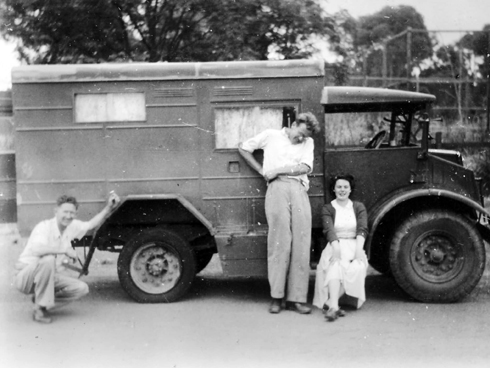
Then they bought a ‘blitz wagon’ for 20 pounds from an auction in Perth. For several months Ross and Frank slept in the wagon.
Some time later the interior, made from thick ply, deteriorated and began falling apart. It was then they discovered that in between the ply and the outer wall were many unexploded .303 bullets!
George Hendry later bought the blitz wagon, intending to convert it into a tow truck.
Ross recalls that in the ten or so years after the end of WWII there were many farmers who used ex-army tanks to clear their properties. The Moir brothers in Borden used one.
He also recalls for many years an old tank was abandoned on the side of the Albany highway near the Brookton turn-off.
Ross and Frank used gelignite to break up rock when dam sinking, at that time it was sold over the counter at the Gnowangerup Co-op.
A plough or a ‘ripper’ (later) was used to dig in as deep as possible, to a depth of 18 inches to 2 foot. If it was pipe clay they could go down a metre, but sometimes only a few inches if it was hard. Then this was scooped out.
Ross and Frank also undertook dam cleaning and clearing.
Ross and Frank eventually bought their own farms.
Ross had 'Tal-Eifion' and Frank had 'Tarrahul'.
They had a system whereby they cleared around the paddock, moving in a circle slowly towards the middle.
It was usual to find mallee hens and kangaroos left in the middle section. Ross and Frank always shot one or two kangaroos for the dogs and a couple of mallee hens for themselves.
Ross recalled that mallee hen was very nice to eat, and was about the size of a large chicken. They later purchased a 1700-acre (688 hectare) property. There were a lot of mallee hen nests on that property, in fact Ross counted 15 in one day of clearing for a fence line.
Fire was used in the new blocks at Jerramungup. They built the fire in a circle, there were 200 acre blocks, and they were all lit on one side. As the fire got going, they lit the other two sides and then the opposite side. When the fire met in the middle there was often a huge explosion. The smoke from clearing could be seen 50 miles away.
One day whilst clearing they chopped a tree and it fell the wrong way - across the main road. Charlie Black was on the scene. He used an axe to cut the end off so the traffic could pass, then they lifted it into the back of their van, tied some wheels to the end of the tree and pulled it off the road.


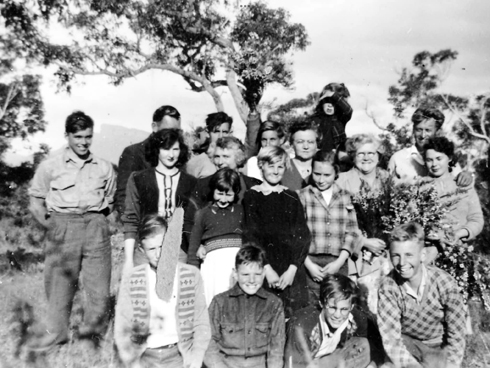
ROSS MILL COLLECTION                #2
 

 ROSS MILL COLLECTION                #3
 

ROSS MILL COLLECTION                #4
 

 ROSS MILL COLLECTION                #5
 

Other Work

One of the jobs Ross and Frank took on was erecting karri telephone poles. Once the poles were in the ground they became the property of the PMG

Gnowangerup People, Places

Ross remembers Lionel Stutley who had wagon to go roo shooting. He had two kangaroo dogs, big ones, one of which would run up to Ross’s wife and put his feet up on her shoulders and lick her face.
The dogs chased the kangaroos, caught them and broke their necks. Lionel loaded them onto the cart. He usually killed two at a time for the dogs.


 ROSS MILL COLLECTION                #6
 

Cleaning the Mineral Swimming Pool

Ross recalls the Gnowangerup Pool being emptied once a year (‘they pulled the plug out’!) and scraped it. The pool took two days to refill, at first the water was clear them it went ‘rusty’. Ross had drawn the design for the original change sheds, he was not an architect but had drafting experience.
The sheds were built by Caramia’s, builders in Gnowangerup. He built them on an angle. About 20 foot by 10 or 12 foot.

Caravan Making

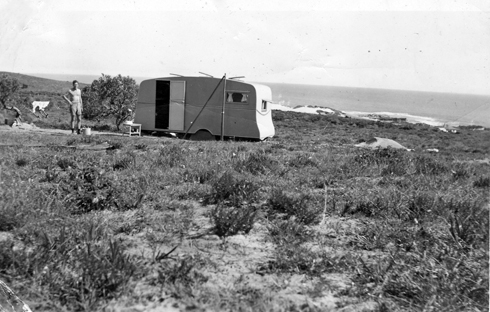
Ross spoke of how Frank and he had made wooden caravans.
Ross later gave his kero tractor to the Gnowangerup Kindergarten. It was placed their front play area.

Later Life

Ross went back to visit his farm 'Tal-Eifion' around 1990. He was shocked how in the passage of time, everything was lying around. The old tractor, a P6 had deteriorated completely. The house not lived in. He went back not so long ago and the roof had caved in on the house.
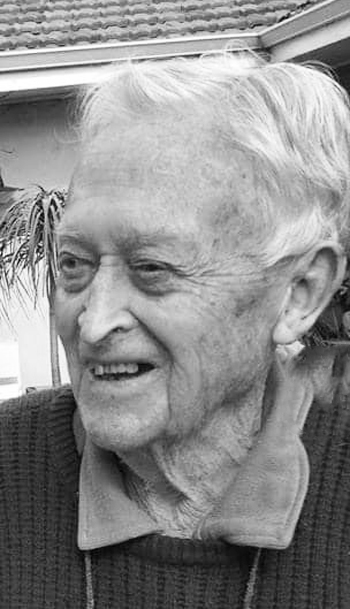
I met with Ross in 2011 at his home in Melville. He maintained a full vegetable garden in his front yard. Ross was a great conversationalist and I wish I had been able to record all the stories he told me!


Every endeavour has been made to accurately record the details however if you would like to provide additional images and/or newer information we are pleased to update the details on this site. Please use CONTACT at the top of this page to email us. We appreciate your involvement in recording the history of our area.


References:                 Article:      Merilyn Stewart
                                                 Posted by Jaquie Walker in 2022

                                  Image:     1, 2, 3, 4, 5, 6         Jaquie Walker


Copyright : Gordon Freegard 2024 - 2026